





How to Make the Perfect Vietnamese Pho
Making Vietnamese pho at home is a rewarding experience that fills your kitchen with mouthwatering aromas. I love how this recipe allows me to create a comforting bowl of soup that’s both nutritious and satisfying. Let’s dive into the step-by-step process of crafting this delicious dish!
Step 1 – Prep Your Ingredients Quickly
Start by gathering all your ingredients. Rinse the beef bones under cold water to remove any impurities. Halve the onion and ginger, as these will infuse the broth with rich flavors. This initial prep is quick and sets the stage for a delightful cooking experience.
Step 2 – Begin Cooking
In a large pot, add the rinsed beef bones and cover them with water. Bring it to a boil and let it bubble for about 10 minutes. This step helps to draw out impurities, ensuring a clear broth. After boiling, drain and rinse the bones again. Now, return them to the pot, add 8 cups of fresh water, the brisket, onion, ginger, star anise, cinnamon stick, cloves, and coriander seeds. Bring everything to a boil once more, then reduce the heat to low. Let it simmer uncovered for about 3 hours, skimming off any foam that rises to the surface. The aroma will be heavenly!
Step 3 – Combine Ingredients and Cook
After 3 hours, carefully remove the brisket and set it aside to cool. Continue simmering the broth for another hour to deepen the flavors. Once the brisket is cool, slice it thinly against the grain. Strain the broth through a fine-mesh sieve into a clean pot, discarding the solids. Stir in the fish sauce and sugar, adjusting the seasoning to your taste. This is where the magic happens, as the broth transforms into a fragrant elixir!
Step 4 – Final Touches & Serving Suggestions
Cook the rice noodles according to the package instructions, then drain and divide them among serving bowls. Ladle the hot broth over the noodles, and top with the sliced brisket and a generous handful of fresh herbs. Serve with lime wedges, bean sprouts, jalapeños, hoisin sauce, and Sriracha on the side. Each bowl is a canvas for you to create your perfect pho masterpiece!
Introduction to Vietnamese Pho
Vietnamese pho is more than just a dish; it’s a warm embrace in a bowl. This beloved traditional soup is renowned for its rich, aromatic broth and tender slices of beef, making it a comforting favorite for many. The combination of spices, fresh herbs, and zesty lime creates a symphony of flavors that dance on your palate, transporting you straight to the bustling streets of Vietnam.
As a busy health-conscious adult, I understand the struggle of finding time to prepare nutritious meals. That’s why making pho at home is such a game-changer. Not only can you control the ingredients, ensuring they align with your dietary preferences, but you also get to enjoy the therapeutic process of cooking. The act of simmering the broth fills your kitchen with enticing aromas, making it a delightful experience for both you and your family.
Plus, homemade pho is a fantastic way to incorporate fresh, wholesome ingredients into your diet. With just a few simple steps, you can create a nourishing meal that’s perfect for any day of the week. So, let’s roll up our sleeves and dive into the world of Vietnamese pho!
Why You’ll Love This Delicious Low-Carb Pho Recipe
One of the best things about making Vietnamese pho at home is the convenience it offers. You have complete control over the ingredients, allowing you to customize the flavors to suit your family’s preferences. Whether you prefer a spicier broth or a milder taste, you can easily adjust the seasonings and toppings. This flexibility makes it a fantastic option for busy health-conscious adults like us, who want to enjoy a nutritious meal without the hassle of dining out.
As the broth simmers, the delightful aroma fills your kitchen, creating an inviting atmosphere that draws everyone in. I can’t tell you how many times my family has gathered around the stove, eagerly anticipating the first taste of our homemade pho. It’s a meal that not only nourishes the body but also brings us together, making it a perfect family dish.
What I love most about this recipe is its simplicity. Even if you’re a novice cook, you’ll find that the steps are straightforward and easy to follow. With just a little bit of prep and patience, you can create a bowl of Vietnamese pho that rivals any restaurant. Plus, the satisfaction of serving a homemade meal is truly rewarding. So, roll up your sleeves and get ready to impress your loved ones with this delicious low-carb pho!
Ingredients You’ll Need for This Recipe
To create the perfect bowl of Vietnamese pho, you’ll need a selection of fresh ingredients that work together to build rich flavors. Here’s what you’ll need:
- Beef bones: These are essential for a rich, flavorful broth. Marrow bones are particularly great for adding depth.
- Beef brisket: This cut provides tender meat that complements the broth beautifully.
- Onion and ginger: Halved, these aromatics infuse the broth with a warm, inviting depth of flavor.
- Spices: Star anise, cinnamon, cloves, and coriander seeds add aromatic notes that are signature to pho.
- Rice noodles (bánh phở): These are the base of your dish, providing a satisfying texture that soaks up the broth.
- Fresh herbs: Basil, cilantro, and mint are essential for garnishing, adding freshness and vibrancy to each bowl.
- Lime: Cut into wedges, lime adds a zesty brightness that elevates the flavors.
- Bean sprouts: These provide a crunchy texture and are a classic topping for pho.
- Sliced jalapeños: Optional, but they add a spicy kick for those who enjoy a bit of heat.
- Hoisin sauce and Sriracha: These sauces are perfect for serving on the side, allowing everyone to customize their bowl.
Feel free to experiment with different cuts of beef, such as flank steak or sirloin, for varied flavors and textures. Exact measurements for each ingredient will be provided at the end of this recipe for your convenience. Happy cooking!
How to Make the Perfect Vietnamese Pho
Making Vietnamese pho at home is a rewarding experience that fills your kitchen with mouthwatering aromas. I love how this recipe allows me to create a comforting bowl of soup that’s both nutritious and satisfying. Let’s dive into the step-by-step process of crafting this delicious dish!
Step 1 – Prep Your Ingredients Quickly
Start by gathering all your ingredients. Rinse the beef bones under cold water to remove any impurities. Halve the onion and ginger, as these will infuse the broth with rich flavors. This initial prep is quick and sets the stage for a delightful cooking experience.
Step 2 – Begin Cooking
In a large pot, add the rinsed beef bones and cover them with water. Bring it to a boil and let it bubble for about 10 minutes. This step helps to draw out impurities, ensuring a clear broth. After boiling, drain and rinse the bones again. Now, return them to the pot, add 8 cups of fresh water, the brisket, onion, ginger, star anise, cinnamon stick, cloves, and coriander seeds. Bring everything to a boil once more, then reduce the heat to low. Let it simmer uncovered for about 3 hours, skimming off any foam that rises to the surface. The aroma will be heavenly!
Step 3 – Combine Ingredients and Cook
After 3 hours, carefully remove the brisket and set it aside to cool. Continue simmering the broth for another hour to deepen the flavors. Once the brisket is cool, slice it thinly against the grain. Strain the broth through a fine-mesh sieve into a clean pot, discarding the solids. Stir in the fish sauce and sugar, adjusting the seasoning to your taste. This is where the magic happens, as the broth transforms into a fragrant elixir!
Step 4 – Final Touches & Serving Suggestions
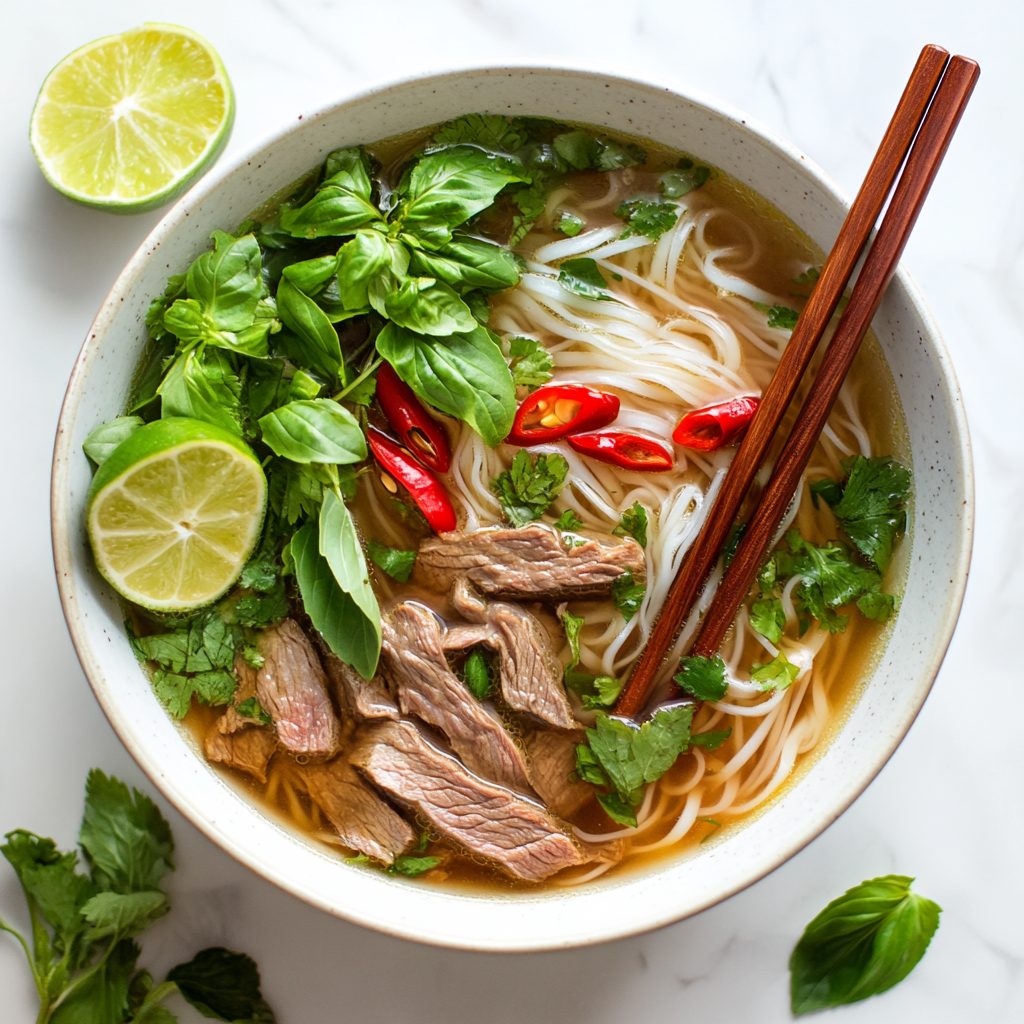
Cook the rice noodles according to the package instructions, then drain and divide them among serving bowls. Ladle the hot broth over the noodles, and top with the sliced brisket and a generous handful of fresh herbs. Serve with lime wedges, bean sprouts, jalapeños, hoisin sauce, and Sriracha on the side. Each bowl is a canvas for you to create your perfect pho masterpiece!
Expert Tips to Ensure Keto Cooking Success
As you embark on your journey to create the perfect Vietnamese pho, here are some expert tips that I’ve gathered over the years to ensure your cooking success. These simple yet effective strategies will elevate your dish and make the process even more enjoyable!
- Roast for Richer Flavor: For a deeper, more complex broth, consider roasting the beef bones and halved onion in the oven at 400°F for about 30 minutes before adding them to the pot. This step caramelizes the sugars and enhances the overall flavor of your pho.
- Adjust Seasoning to Taste: Don’t hesitate to taste your broth as it simmers. Adjust the seasoning with fish sauce and sugar according to your preference. Everyone’s palate is different, and this is your chance to make the broth uniquely yours!
- Store Leftovers Properly: If you have any pho left over, store the broth and noodles separately to maintain their textures. The broth can be refrigerated for up to 4 days or frozen for longer storage. When reheating, simply warm the broth and add freshly cooked noodles for a quick meal.
By following these tips, you’ll not only enhance the flavors of your Vietnamese pho but also streamline your cooking process. Enjoy the journey of creating this delicious dish!
Essential Kitchen Tools for This Pho Recipe
To make your Vietnamese pho experience seamless and enjoyable, having the right kitchen tools is essential. Here’s a list of the necessary tools you’ll need:
- Large pot: A sturdy pot is crucial for simmering the broth. Look for one that holds at least 8 quarts to accommodate all the ingredients.
- Fine-mesh sieve: This tool is perfect for straining the broth, ensuring a clear and smooth consistency. If you don’t have one, a colander lined with cheesecloth can work as a substitute.
- Sharp knife: A good-quality knife is essential for slicing the brisket thinly against the grain. A chef’s knife or a carving knife will do the trick.
- Bowls for serving: Choose deep bowls to hold the noodles and broth comfortably. If you’re serving a crowd, consider using large soup bowls or even a communal serving dish.
Having these tools on hand will make your cooking process smoother and more enjoyable. Happy cooking!
Delicious Variations to Customize Your Pho Dish
One of the joys of making Vietnamese pho at home is the ability to customize it to suit your taste and dietary preferences. Here are some delightful variations that I’ve tried and loved, which can elevate your pho experience:
- Different Proteins: While beef is traditional, you can easily switch things up by using chicken or even tofu for a vegetarian option. Chicken pho is equally comforting, and using shredded rotisserie chicken can save you time. For a plant-based twist, marinated tofu can absorb the broth’s flavors beautifully.
- Add Extra Vegetables: Boost the nutrition of your pho by adding vegetables like bok choy, mushrooms, or even spinach. These not only enhance the flavor but also add a lovely texture. Simply toss them into the broth during the last few minutes of cooking to keep them vibrant and fresh.
- Experiment with Herbs and Spices: While basil, cilantro, and mint are classic garnishes, don’t hesitate to experiment with other herbs like Thai basil or even a sprinkle of green onions. You can also play with spices; a dash of cardamom or a hint of chili flakes can add a unique twist to your broth.
These variations allow you to create a pho dish that’s uniquely yours, catering to your family’s preferences and dietary needs. So, feel free to get creative and enjoy the process of making this beloved Vietnamese dish!
Best Keto-Friendly Sides & Beverage Pairings
To elevate your homemade Vietnamese pho experience, consider pairing it with some delicious keto-friendly sides and beverages. These options not only complement the flavors of the pho but also keep your meal light and nutritious. Here are a few of my favorites:
- Cucumber Salad with Vinegar Dressing: This refreshing salad is a perfect side dish. Simply slice cucumbers thinly and toss them with a light vinegar dressing made from rice vinegar, a touch of sesame oil, and a sprinkle of sesame seeds. The crispness of the cucumbers balances the warmth of the pho beautifully.
- Avocado Slices: Creamy avocado slices are a fantastic addition to your meal. They provide healthy fats and a smooth texture that pairs well with the broth. You can enjoy them plain or sprinkle a little salt and lime juice for extra flavor.
- Herbal Teas or Sparkling Water with Lime: To quench your thirst, opt for herbal teas like mint or lemongrass, which can enhance the aromatic experience of your pho. Alternatively, sparkling water with a squeeze of lime adds a refreshing touch that complements the dish perfectly.
These keto-friendly sides and beverages not only enhance your dining experience but also keep your meal aligned with your health goals. Enjoy the delightful combination of flavors as you savor your homemade Vietnamese pho!
FAQs About Making Vietnamese Pho at Home
As you embark on your journey to create the perfect Vietnamese pho, you might have some questions. Here are a few common queries I’ve encountered, along with helpful answers to guide you through the process:
- Can I make pho in a slow cooker? Absolutely! Making Vietnamese pho in a slow cooker is a convenient option. Simply follow the same steps for preparing the broth, then transfer the ingredients to your slow cooker. Set it on low for 8 hours or high for 4 hours. This method allows the flavors to meld beautifully while you go about your day.
- How do I store leftover pho? To keep your pho fresh, store the broth and noodles separately. The broth can be refrigerated for up to 4 days or frozen for longer storage. When reheating, warm the broth and cook fresh noodles to maintain the best texture. This way, you can enjoy your homemade pho again without compromising on quality!
- What can I substitute for rice noodles? If you’re looking for alternatives to traditional rice noodles, consider using zucchini noodles or shirataki noodles for a low-carb option. Both provide a satisfying texture while keeping your dish keto-friendly. Just remember to adjust cooking times accordingly, as these alternatives may require less time to prepare.
These FAQs should help clarify any uncertainties you may have about making Vietnamese pho at home. Enjoy the process and the delicious results!
Final Thoughts on This Easy Keto-Friendly Vietnamese Pho
As I reflect on the joy of making Vietnamese pho at home, I can’t help but feel a sense of accomplishment. There’s something incredibly satisfying about crafting a dish that not only warms the soul but also nourishes the body. Each bowl of pho is a labor of love, filled with rich flavors and fresh ingredients that come together to create a comforting meal.
I encourage you to try this recipe and experience the magic of homemade pho for yourself. Whether you’re cooking for family or enjoying a quiet evening alone, this dish has a way of bringing people together. Don’t be afraid to explore your creativity in the kitchen! Adjust the spices, experiment with different proteins, or add your favorite vegetables. The beauty of pho lies in its versatility, allowing you to make it uniquely yours.
So, roll up your sleeves, gather your ingredients, and embark on this culinary adventure. I can’t wait to hear about your experiences and the delicious variations you create. Happy cooking, and enjoy every flavorful spoonful of your homemade Vietnamese pho!
Print
“Vietnamese pho: Discover the Perfect Homemade Recipe!”
- Total Time: 4 hours 30 minutes
- Yield: Serves 6
- Diet: Gluten Free
Description
Discover the perfect homemade Vietnamese pho recipe with rich flavors and fresh ingredients.
Ingredients
- 1 pound beef bones (preferably marrow bones)
- 1 pound beef brisket
- 1 onion, halved
- 1 piece of ginger (about 2 inches), halved
- 4 star anise
- 1 cinnamon stick
- 4 cloves
- 1 tablespoon coriander seeds
- 8 cups water
- 2 tablespoons fish sauce
- 1 tablespoon sugar
- 1 package (14 ounces) rice noodles (bánh phở)
- Fresh herbs (basil, cilantro, mint)
- 1 lime, cut into wedges
- Bean sprouts
- Sliced jalapeños (optional)
- Hoisin sauce (for serving)
- Sriracha sauce (for serving)
Instructions
- In a large pot, add the beef bones and cover with water. Bring to a boil and let it boil for 10 minutes. Drain and rinse the bones to remove impurities.
- Return the bones to the pot and add 8 cups of fresh water, the brisket, onion, ginger, star anise, cinnamon stick, cloves, and coriander seeds.
- Bring the pot to a boil, then reduce the heat to low. Simmer uncovered for about 3 hours, skimming off any foam that rises to the surface.
- After 3 hours, remove the brisket and set it aside to cool. Continue simmering the broth for another hour.
- Once the brisket is cool, slice it thinly against the grain. Strain the broth through a fine-mesh sieve into a clean pot, discarding the solids.
- Stir in the fish sauce and sugar into the strained broth. Adjust seasoning to taste.
- Cook the rice noodles according to package instructions. Drain and divide among serving bowls.
- Ladle the hot broth over the noodles, then top with sliced brisket and fresh herbs. Serve with lime wedges, bean sprouts, jalapeños, hoisin sauce, and Sriracha on the side.
Notes
- For a richer broth, roast the bones and onion in the oven at 400°F for 30 minutes before adding them to the pot.
- You can substitute the brisket with other cuts of beef like flank steak or sirloin for different flavors and textures.
- Prep Time: 30 minutes
- Cook Time: 4 hours
- Category: Soup
- Method: Simmering
- Cuisine: Vietnamese
Nutrition
- Serving Size: 1 bowl
- Calories: 350
- Sugar: 1g
- Sodium: N/A
- Fat: 10g
- Saturated Fat: N/A
- Unsaturated Fat: N/A
- Trans Fat: N/A
- Carbohydrates: 40g
- Fiber: N/A
- Protein: 25g
- Cholesterol: N/A


